
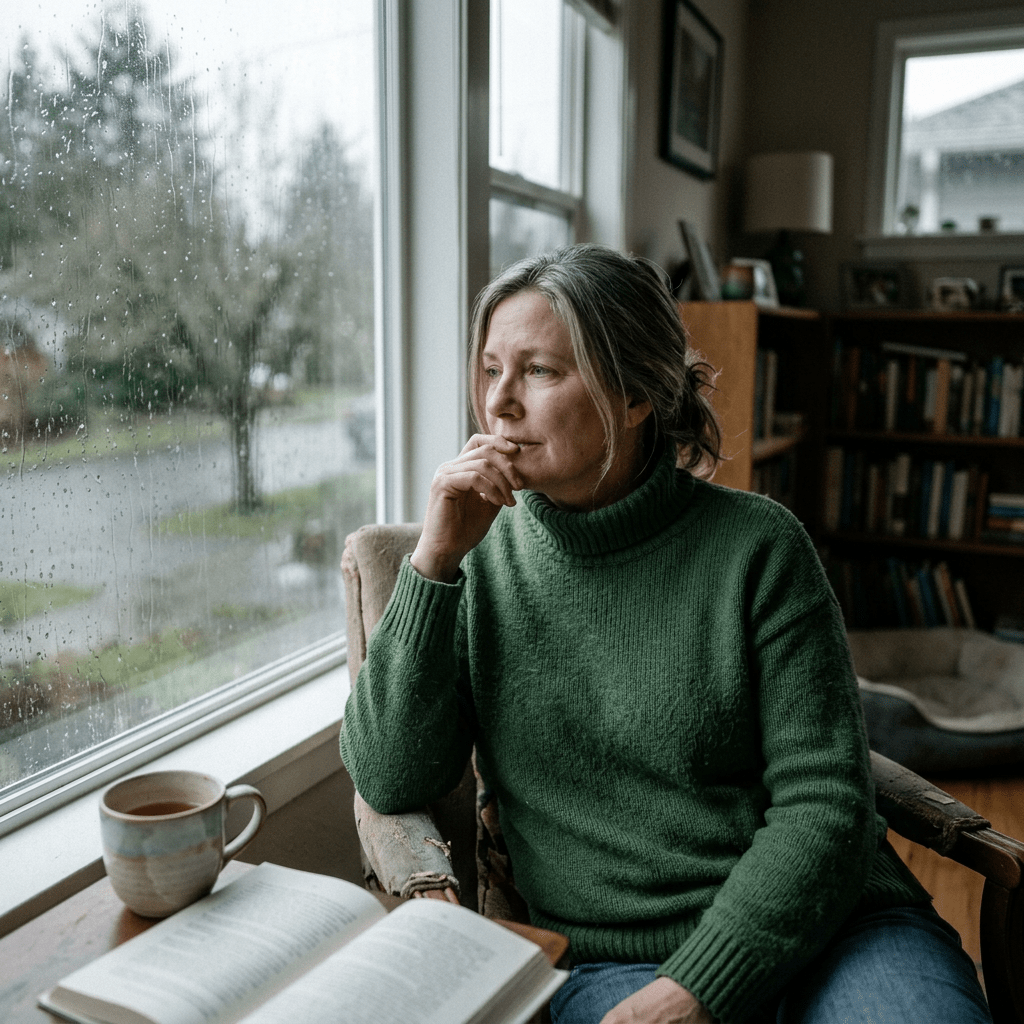
If you’ve typed some version of “why don’t I feel like myself anymore” into Google at 11pm, you’re not alone, and you’re definitely not imagining it.
Written by: Diana Alvarado, Certified Menopause Coach
So many of the women I coach start our first session with a version of the same sentence: “I just want to feel like myself again.” Not a symptom list. Not a number on a scale. Just — themselves. Their spark back. Some sense of balance. The ability to move through their day without feeling like a stranger in their own body.
If that’s you right now, here’s what I want you to know first: this feeling has a name, a cause, and a way forward.
What Does “Losing Yourself” in Perimenopause Actually Feel Like?
It rarely shows up as one big moment, where you can say “it started when….” . It’s smaller than that and stranger. It’s:
-Feeling less bubbly, less like the person your friends and family are used to.
-A loss of motivation or joy that doesn’t match anything “wrong” in your life, because you do have a lot to be grateful for.
-Brain fog that makes you second-guess yourself in conversations.
-Wanting to move your body but not knowing what “movement that works for you” even looks like anymore.
-Snapping at the people you love, then feeling guilty about it within minutes.
-Just wanting to feel ‘balanced’, a word that shows up again and again, because it’s the thing that’s missing.
None of this means something is wrong with you. It means something is happening to you physiologically, and it deserves an explanation, not just a to-do list of changes.
Why Do Hormonal Changes Make You Feel Like You Don’t Recognize Yourself?
Perimenopause isn’t simply declining hormones, its a very complex system where your estrogen and progesterone are fluctuating, often wildly, sometimes week to week. That instability is often more disruptive than the eventual lower hormone levels that stable post menopause.
So what is actually happening?
Estrogen influences serotonin and dopamine, the neurotransmitters tied to motivation and joy. When it fluctuates, feeling “flat” or unmotivated can be genuinely physiological, not a personal failing.
Progesterone affects GABA, your brain’s calming chemical. As it drops, your nervous system has a harder time settling, which shows up as anxiety, trouble sleeping, and feeling “on” all the time.
Estrogen also buffers your stress response. As it fluctuates, the same responsibilities that used to feel manageable can start to feel disproportionately heavy. That’s not you “handling things worse”. That’s a shifted baseline.
In other words: if you feel like you’re losing yourself in perimenopause, your hormones are a real part of why.
Common Signs in Perimenopause
Women describe this stage in strikingly similar language, even when their lives look completely different:
Brain fog or trouble concentrating.
Disrupted sleep, including waking at 3am and struggling to fall back asleep.
Mood swings, irritability, or anxiety that feel out of character.
Low motivation or a loss of joy in things you used to enjoy.
Weight changes that don’t respond to the effort you’re putting in.
If several of these sound familiar, you’re in a well a hormonal transition that most women aren’t prepared for.
You’re Carrying a lot More Than just Changing Hormones
Here’s what makes this stage especially heavy: it rarely happens in isolation. Many of the women I work with are juggling this hormonal shift while caregiving for aging parents, raising kids, (just because they may be older, doesn’t mean there is less for you to take care of) managing a household: appointments, gifts, the household ‘to do list’ like you are a project manager, or holding a full-time job and a side business at once. The hormonal fluctuation is real, but so is the sheer load. When both hit at the same time, “I don’t feel like myself” isn’t dramatic. It’s an accurate description of what’s actually happening.
How to Start Feeling Like Yourself Again in Perimenopause
The good news is you don’t need to make drastic changes to your entire life to start feeling different. In my coaching practice, we don’t start with five categories of change at once — we start with one clear, specific behaviour that actually moves the needle, chosen by you, not handed to you.
A few starting points that tend to help most:
Name one outcome, specifically. Not “feel better”, but would you actually notice, day to day, if you felt like yourself again? What would your day be like, what would you feel like. What would you notice is different?
Pick one small, doable behaviour, not a full plan. It could be: a consistent bedtime wind-down, one higher protein meal, five minutes of breathing at a hard transition point in your day.
Rate your own confidence before committing. If a new habit doesn’t feel at least a 7-out-of-10 doable, make it smaller. Your ability to follow through with confidence, predicts whether it actually sticks.
Track it. Not to be hard on yourself, but to notice the progress, this isn’t about perfection. Even 60–70% consistency each week is real momentum.
When to Get Support
If you’ve been trying to push through this alone by Googling symptoms at midnight, trying another diet, telling yourself you should be able to handle it, it might be time for a different kind of support. This stage responds well to guidance and support that’s personalized to your body, your symptoms, and your actual life, not a plan that is restrictive or built for someone else’s goals.
You don’t have to figure this out by yourself. Feeling like yourself again is possible and it usually starts with one small, well-chosen step.
If you would like support on knowing where to start, reach out by emailing diana@dianaempowered.com, and let’s figure this out together.


Leave a Reply